
GRC Transformation

GRC systems built around the decisions you make

Eclat helps organisations turn risk frameworks into practical systems. The work starts with the decisions boards and executives need to make, then shapes ownership, workflows, controls and reporting around those needs.

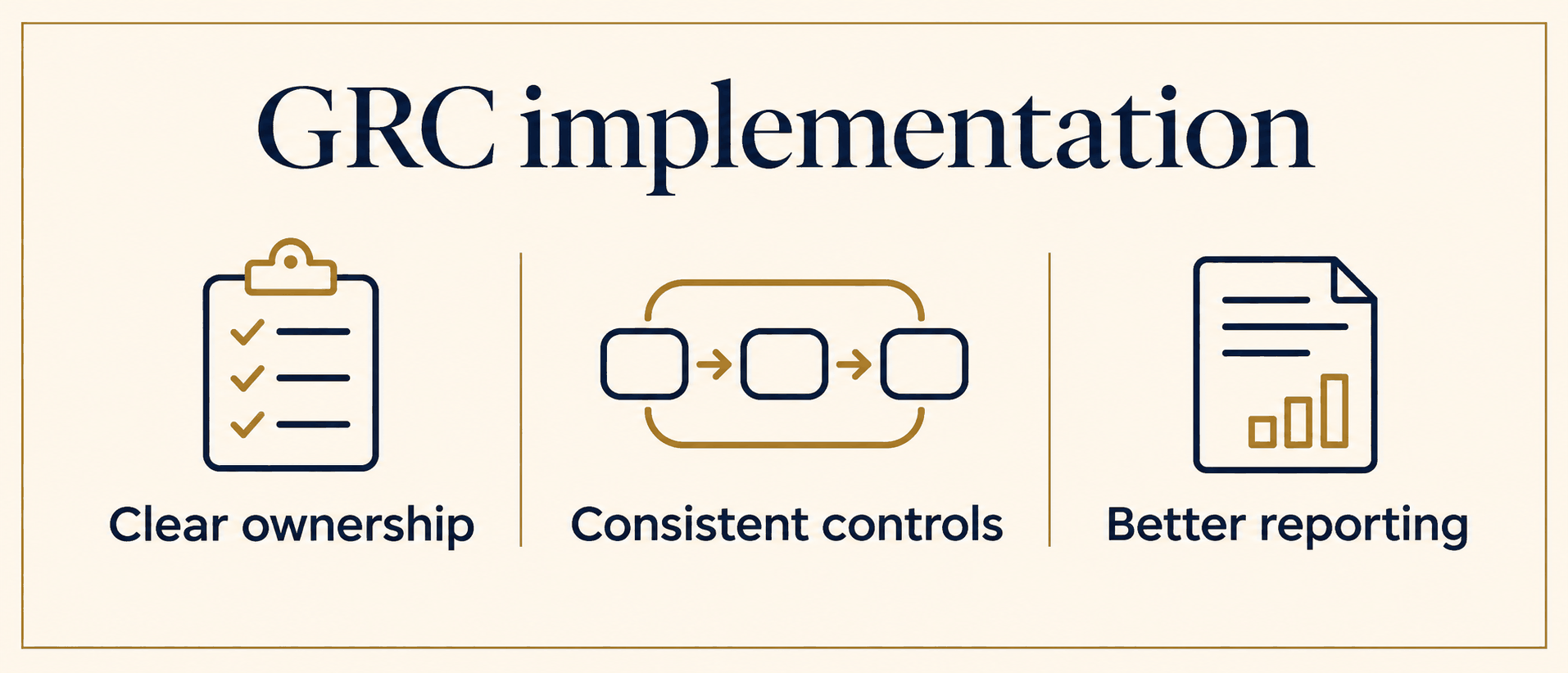
GRC implementation benefits: clear ownership, consistent controls and better reporting.
GRC transformation

Andrew Townsend’s platform experience

Andrew’s platform experience includes an enterprise risk register in IBM OpenPages at the National Institute of Dramatic Art, Protecht at NSW Treasury and Diligent at the Australian Computer Society. His regulatory experience includes CPS 220 Risk Management, CPS 230 Operational Risk Management, CPS 234 Information Security and business continuity standards.

GRC transformation

What implementation involves

Platform design follows the operating model: who owns each risk, who reviews it, what evidence is needed and when an issue reaches a committee. Those choices shape the register, workflow and reports.

Framework design

Risk management framework, governance responsibilities, risk ownership and assurance processes defined before any platform is configured.

Platform implementation

Enterprise GRC implementation activities led or supported across financial services, government, education and not-for-profit organisations.

Workflows and capture

Configure risk, control and incident records, ownership, review steps and escalation paths so the platform reflects how the organisation works and supports CPS 230 and continuity requirements where relevant.

Board and committee reporting

Reporting requirements aligned to Board and committee obligations, with risk measurement via KRIs feeding the picture executives rely on.

Platform delivery

Selected platform experience

Hands-on implementation work across financial services, government, education and not-for-profit organisations.

Two people analyzing a document with green bar charts

Enterprise risk register and Board reporting configured for structured risk capture.

PlatformOrganisationScopeSector
DiligentAustralian Computer SocietyRisk framework, governance and Board reportingNot-for-profit
IBM OpenPagesNational Institute of Dramatic ArtEnterprise risk register, risk capture and ownershipEducation
ProtechtNSW TreasuryProtecht risk management platform and operational risk processesFinancial services
Diligent, OpenPages, ProtechtBanking and insuranceCPS 230 operational risk, CPS 234 information security and business continuity standardsBanking & insurance
Framework designGovernment and superannuationRisk policies, workflows and assurance processesGovernment
GRC transformationEclat engagementsEnd-to-end implementation, training and reportingMulti-sector
How a GRC engagement runs

From design to board reporting

A connected sequence: define the framework and ownership, configure workflows and assurance, then deliver reporting that supports board and committee decisions.

01

Framework design

Align the risk management framework, governance responsibilities and risk ownership before any platform work begins.

02

Platform implementation

Configure the selected platform — Diligent, IBM OpenPages or Protecht — around agreed risk data, ownership, controls, workflow and reporting requirements.

03

Workflows and assurance

Establish assurance processes and workflows that route risks to the right owners and keep accountability visible.

04

Board reporting

Deliver Board and committee reporting requirements so executives see the risk picture they need to decide.

Contact Eclat Consulting

Begin with a confidential conversation

Tell Andrew what your GRC system needs to support, which platform you use or are considering, and where the current process is falling short.

Led by Andrew Townsend — 20+ years of senior risk leadership experience
Senior-led engagements Australia-wide, from Australia Direct discussion, no obligation